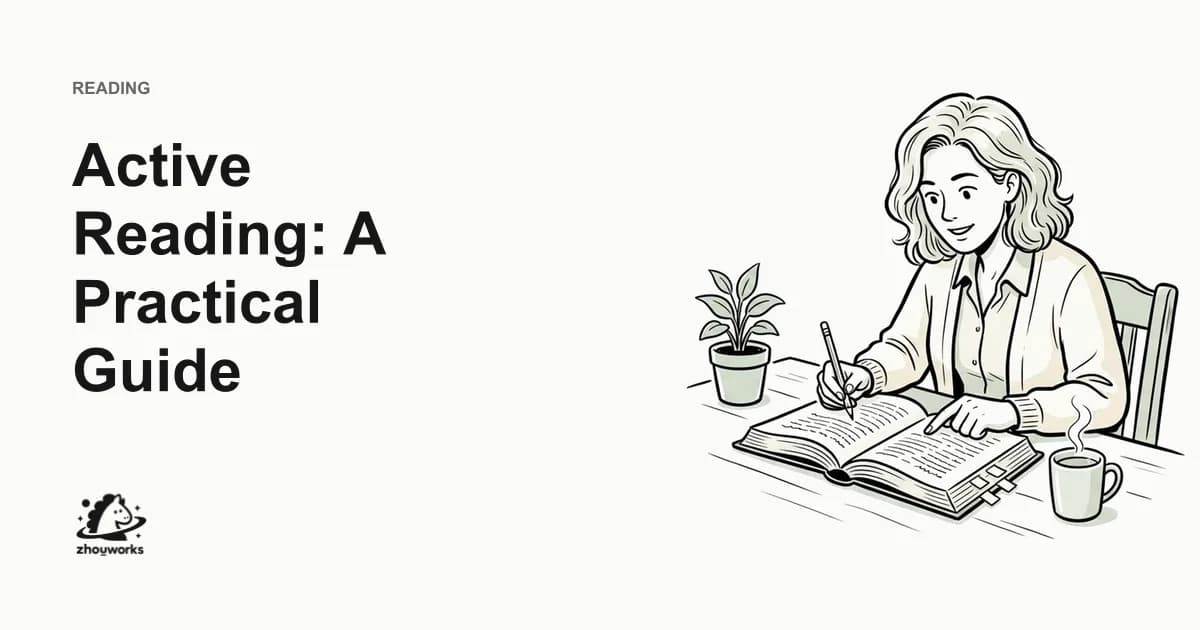
You close a book and find pages covered in highlights. A month later, when you need one idea, you still have to search almost from the beginning. Taking useful notes is less about recording more and more about knowing what you kept and where to find it.
A useful note can be just the main idea in your own words, why it matters and where it came from. Add one small action if you want to try the idea. This can help when you read to learn or solve a problem; it is perfectly fine to read for pleasure without taking notes.
Choose a question before you start
Ask yourself what you want to understand or do after reading. Suppose you want to run a shorter meeting. You do not need to copy an entire chapter about communication; look for ideas that help you choose a purpose, invite the right people or make a decision.
If you have no question yet, read a few pages and notice what makes you curious. Cornell's Learning Strategies Center suggests identifying your purpose and planning how you will use the information. Adapt that step to the book and the time you have.
Mark a passage, then explain why it matters
When you find a useful passage, mark its location. When you want to keep the idea, write a sentence answering “What is the point?” and, if helpful, “How does this relate to my question?” Use your own words. If you want to keep the author's exact words, put them in quotation marks and record the page so you do not later mistake them for your own summary.
Highlighting is not a competition. If most of a page seems useful, write a question in the margin or mark the beginning of the passage. When you return, reread the context: a sentence on its own can leave out a condition explained nearby.
A four-line reading note
Imagine you have read a passage about preparing meetings in an imaginary book:
- Question: What does this meeting need to decide?
- Main idea: Identify the decision before inviting people.
- Source: The imaginary book “Working Together”, chapter 2, page 18.
- Next step: Put the decision in the next meeting invitation.
This is an invented example, not a quotation or a claim about a specific book. For an ebook without fixed page numbers, record the chapter and add a bookmark if your device supports it. You do not need all four lines every time. A question and page reference may be enough when you are exploring; a next step helps when you want to try something. If a number needs checking, note that question privately and look for the original study or document cited by the book before repeating it.
Paper or an app?
Choose the option that lets you capture an idea and find it again. A notebook can sit beside a book; include its title and page number consistently. An app can help you search and save links; use a clear note title so it does not become another place to lose things. You can also combine them: write on paper while reading, then move only the ideas you need into a place you search regularly.
For digital materials, Cornell suggests using either the platform's note feature or pen and paper. Try what fits your device and circumstances instead of assuming one tool works for everyone.
Leave yourself a way back

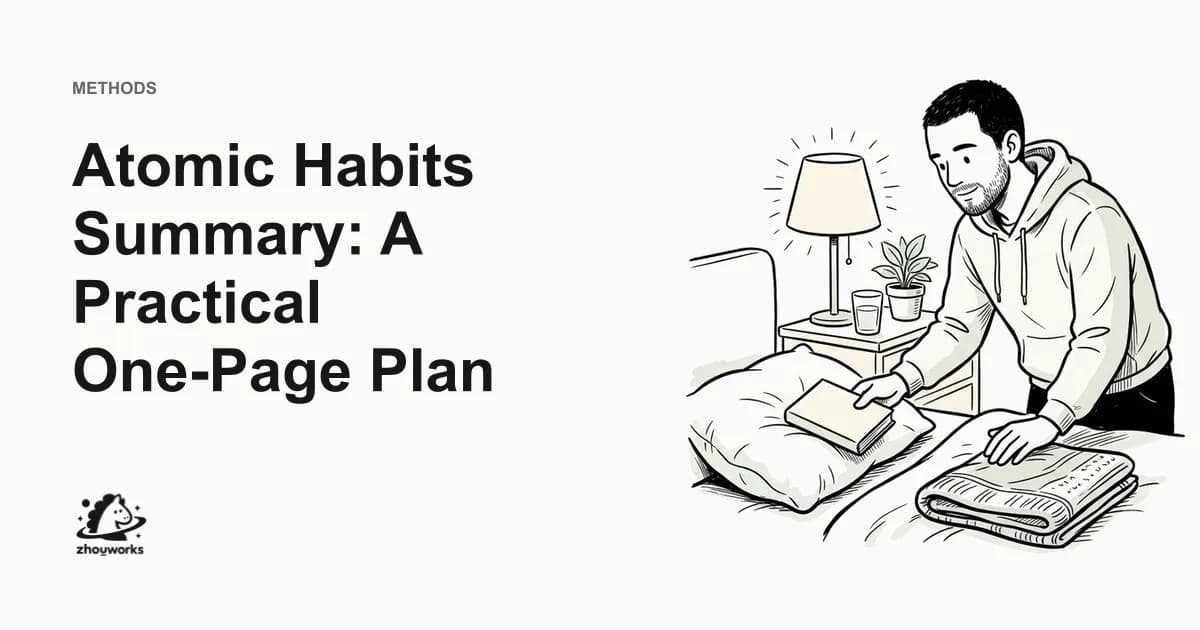
A sticky tab and a few lines of notes are enough to find your way back.
Before putting the book away, choose one or two notes you may want again. Store them with the book title and a phrase you are likely to remember, such as “meetings — decision to make”. When using a note, return to the original passage to check its context, especially before citing or sharing a claim.
For your next reading session, try one paragraph: write its point in your own words and record the page. The active reading guide starts with a question before reading and ends with a quick review; note-taking is one part of that process.